
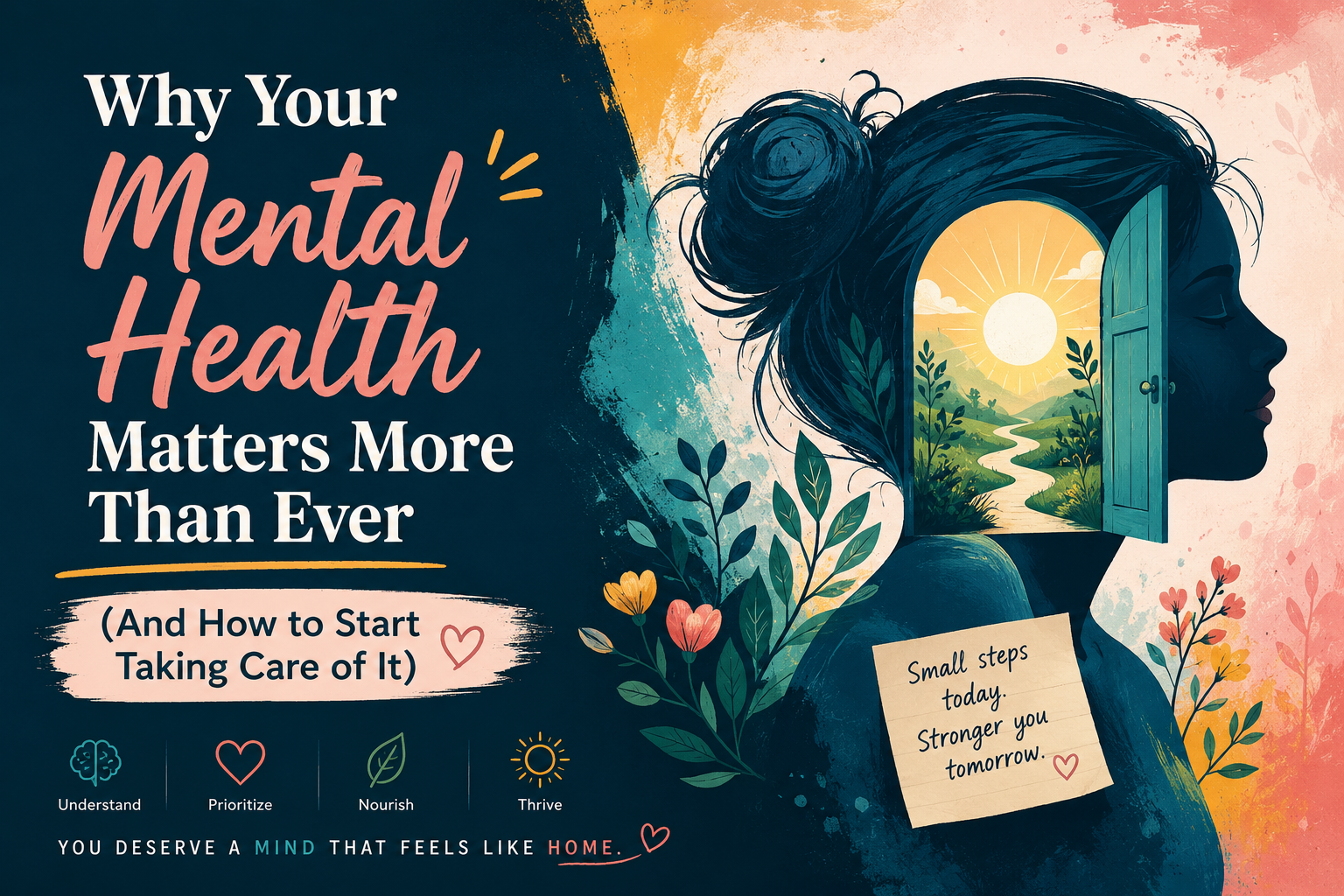
Mental health influences every part of life.
It shapes how you think, feel, build relationships, work, study, solve problems, and respond to challenges.
Yet many people only think about their mental health when stress becomes overwhelming.
The good news is that small daily habits can strengthen emotional well-being before problems grow larger.Mental health influences every part of life.It shapes how you think, feel, build relationships, work, study, solve problems, and respond to challenges.
Yet many people only think about their mental health when stress becomes overwhelming.
The good news is that small daily habits can strengthen emotional well-being before problems grow larger.
This guide explains why mental health deserves attention today and how you can begin taking care of it with realistic, evidence-based steps.
Understanding Mental Health
Mental health is more than the absence of illness.
It includes emotional balance, healthy relationships, resilience, confidence, and the ability to cope with everyday stress.
Strong mental health doesn’t mean feeling happy every day.
It means having the tools to handle both good and difficult moments.
People with good mental wellness still experience sadness, anxiety, disappointment, and frustration.
The difference is that they develop healthy coping skills rather than ignoring or suppressing emotions.
Mental health also changes throughout life.
Major life events, work pressure, financial concerns, social relationships, physical health, and sleep can all influence emotional well-being.
Taking care of mental health should become part of a healthy lifestyle—just like eating nutritious food or exercising regularly.
Small daily actions often create meaningful improvements over time.
What Is Mental Health?
Mental health includes your emotional, psychological, and social well-being.
It affects:
- Decision-making
- Relationships
- Learning
- Productivity
- Confidence
- Emotional regulation
Everyone has mental health.
Just as everyone has physical health.
Both deserve regular care.
Mental Health vs Mental Illness
Mental health and mental illness are not the same.
Mental health exists on a spectrum.
Someone without a diagnosed condition can still struggle emotionally.
Likewise, a person living with a mental health condition can enjoy a fulfilling, meaningful life with the right support, healthy habits, and treatment when needed.
Why Mental Health Matters Today
Modern life places constant demands on attention and emotional energy.
Social media, academic pressure, long work hours, financial uncertainty, and continuous notifications leave little time for genuine rest.
These pressures can increase stress, reduce sleep quality, and make it harder to maintain healthy relationships.
Mental health also affects physical health.
Long-term stress may contribute to headaches, digestive issues, weakened immunity, and cardiovascular problems.
When mental wellness improves, many people notice better concentration, stronger relationships, improved productivity, and greater overall life satisfaction.
Investing in mental health is not a luxury—it supports nearly every area of daily life.
The Impact of Modern Life
Today’s world moves quickly.
Common stressors include:
- Information overload
- Constant comparison on social media
- Academic pressure
- Workplace burnout
- Financial stress
- Poor sleep
- Isolation
Recognizing these pressures helps you respond with healthier habits instead of simply pushing through exhaustion.
The Connection Between Mind and Body
Your mind and body constantly influence one another.
Regular exercise, quality sleep, balanced nutrition, and relaxation practices support emotional well-being.
Likewise, improving mental health can reduce physical symptoms linked to chronic stress.
Visual: Healthy Daily Habits
Common Signs Your Mental Health Needs Attention
Many people overlook early warning signs.
Watch for changes such as:
- Feeling overwhelmed most days
- Constant worry
- Difficulty concentrating
- Irritability
- Loss of motivation
- Withdrawing from friends and family
- Sleeping too much or too little
- Appetite changes
- Feeling emotionally numb
- Loss of interest in activities you once enjoyed
These signs do not automatically indicate a mental health condition, but they suggest it’s worth checking in with yourself and seeking support if they persist.
Emotional Signs
You may notice:
- Increased anxiety
- Frequent sadness
- Hopelessness
- Anger
- Mood swings
- Feeling disconnected
Early awareness allows you to respond before stress becomes overwhelming.
Physical Signs
Mental health challenges often appear physically through:
- Fatigue
- Headaches
- Muscle tension
- Digestive discomfort
- Poor sleep
- Reduced energy
Listening to your body is an important part of self-care.
Simple Habits That Improve Mental Wellness
Small, consistent actions often have a greater impact than occasional dramatic changes.
Start by creating a daily routine that includes enough sleep, regular movement, nourishing meals, and time away from screens.
Physical activity does not need to be intense.
A daily walk, stretching, or light yoga can improve mood and reduce stress.
Prioritize sleep by maintaining a consistent bedtime and limiting screen use before bed.
Choose foods that support brain health, including fruits, vegetables, whole grains, lean proteins, nuts, and healthy fats.
Practice mindfulness through deep breathing, meditation, or simply paying attention to the present moment.
Finally, maintain supportive relationships.
Talking with trusted friends or family members can reduce feelings of isolation and improve resilience.
Consistency matters more than perfection.
Create a Healthy Routine
Simple routines reduce decision fatigue and help create stability.
Include:
- Fixed sleep schedule
- Regular meals
- Exercise
- Breaks
- Time outdoors
Move Your Body
Exercise supports emotional health by reducing stress hormones and promoting the release of mood-supporting chemicals.
Aim for at least 30 minutes of movement most days.
Improve Sleep
Healthy sleep habits include:
- Consistent bedtime
- Cooler room
- Less screen time
- Avoiding caffeine late in the day
Eat for Your Brain
Focus on:
- Fruits
- Vegetables
- Fish
- Nuts
- Seeds
- Whole grains
- Plenty of water
Practice Mindfulness
Mindfulness helps reduce stress by bringing attention back to the present.
Try:
- Deep breathing
- Meditation
- Journaling
- Gratitude
- Gentle stretching
Stay Connected
Strong relationships improve emotional resilience.
Spend time with supportive people and make space for meaningful conversations.
Building Emotional Resilience
Resilience is the ability to recover from challenges while continuing to grow.
It does not mean avoiding stress or pretending everything is fine.
Instead, resilience develops through healthy coping strategies, realistic expectations, and self-compassion.
Accept that difficult emotions are part of being human.
Instead of judging yourself for feeling anxious or overwhelmed, acknowledge those emotions and ask what they might be telling you.
Practicing gratitude can also strengthen resilience.
Writing down a few things you appreciate each day can help shift attention toward positive experiences without ignoring genuine struggles.
Setting realistic goals, celebrating small achievements, and learning from setbacks all contribute to long-term emotional strength.
Over time, these habits build confidence and make future challenges feel more manageable.
Accept Difficult Emotions
Every emotion serves a purpose.
Instead of fighting uncomfortable feelings, notice them with curiosity and respond in healthy ways.
Practice Gratitude
Keep a simple journal.
Write down three things you’re grateful for each day.
This habit can improve perspective and reinforce positive thinking patterns.
Visual: Emotional Wellness
When to Seek Professional Support
There is strength in asking for help.
If emotional distress lasts for several weeks, interferes with work, school, relationships, or daily functioning, consider speaking with a qualified mental health professional.
Therapists, psychologists, counselors, and psychiatrists provide different forms of support based on individual needs.
Seeking help early can improve outcomes and provide practical strategies for managing stress, anxiety, depression, or other concerns.
If you or someone you know is experiencing thoughts of self-harm or feels unable to stay safe, seek immediate help from local emergency services or a crisis support resource.
Professional support can be life-changing, and reaching out is an important step toward recovery.
Therapy
Therapy provides a safe, confidential space to:
- Understand emotions
- Build coping skills
- Improve relationships
- Reduce anxiety
- Manage stress
Crisis Situations
If someone is in immediate danger or cannot keep themselves safe, contact emergency services or a local crisis support service right away.
Frequently Asked Questions
How can I improve my mental health naturally?
Start with quality sleep, balanced nutrition, regular exercise, mindfulness, healthy relationships, and stress management.
How do I know if I need professional help?
If emotional struggles persist for weeks, interfere with daily life, or feel overwhelming, speaking with a qualified mental health professional is a good next step.
Is self-care enough?
Self-care is valuable, but it is not a substitute for professional treatment when symptoms are severe or persistent.
Final Thoughts
Your mental health shapes how you experience every day.
Taking care of it does not require dramatic changes.
Small, consistent habits—sleeping well, staying active, eating nourishing foods, practicing mindfulness, and maintaining supportive relationships—can make a meaningful difference over time.
Start with one small action today.
The good news is that small daily habits can strengthen emotional well-being before problems grow larger.
This guide explains why mental health deserves attention today and how you can begin taking care of it with realistic, evidence-based steps.
Understanding Mental Health
Mental health is more than the absence of illness.
It includes emotional balance, healthy relationships, resilience, confidence, and the ability to cope with everyday stress.
Strong mental health doesn’t mean feeling happy every day.
It means having the tools to handle both good and difficult moments.
People with good mental wellness still experience sadness, anxiety, disappointment, and frustration.
The difference is that they develop healthy coping skills rather than ignoring or suppressing emotions.
Mental health also changes throughout life.
Major life events, work pressure, financial concerns, social relationships, physical health, and sleep can all influence emotional well-being.
Taking care of mental health should become part of a healthy lifestyle—just like eating nutritious food or exercising regularly.
Small daily actions often create meaningful improvements over time.
What Is Mental Health?
Mental health includes your emotional, psychological, and social well-being.
It affects:
- Decision-making
- Relationships
- Learning
- Productivity
- Confidence
- Emotional regulation
Everyone has mental health.
Just as everyone has physical health.
Both deserve regular care.
Mental Health vs Mental Illness
Mental health and mental illness are not the same.
Mental health exists on a spectrum.
Someone without a diagnosed condition can still struggle emotionally.
Likewise, a person living with a mental health condition can enjoy a fulfilling, meaningful life with the right support, healthy habits, and treatment when needed.
Why Mental Health Matters Today
Modern life places constant demands on attention and emotional energy.
Social media, academic pressure, long work hours, financial uncertainty, and continuous notifications leave little time for genuine rest.
These pressures can increase stress, reduce sleep quality, and make it harder to maintain healthy relationships.
Mental health also affects physical health.
Long-term stress may contribute to headaches, digestive issues, weakened immunity, and cardiovascular problems.
When mental wellness improves, many people notice better concentration, stronger relationships, improved productivity, and greater overall life satisfaction.
Investing in mental health is not a luxury—it supports nearly every area of daily life.
The Impact of Modern Life
Today’s world moves quickly.
Common stressors include:
- Information overload
- Constant comparison on social media
- Academic pressure
- Workplace burnout
- Financial stress
- Poor sleep
- Isolation
Recognizing these pressures helps you respond with healthier habits instead of simply pushing t hrough exhaustion.
The Connection Between Mind and Body
Your mind and body constantly influence one another.
Regular exercise, quality sleep, balanced nutrition, and relaxation practices support emotional well-being.
Likewise, improving mental health can reduce physical symptoms linked to chronic stress.
Visual: Healthy Daily Habits
Common Signs Your Mental Health Needs Attention
Many people overlook early warning signs.
Watch for changes such as:
- Feeling overwhelmed most days
- Constant worry
- Difficulty concentrating
- Irritability
- Loss of motivation
- Withdrawing from friends and family
- Sleeping too much or too little
- Appetite changes
- Feeling emotionally numb
- Loss of interest in activities you once enjoyed
These signs do not automatically indicate a mental health condition, but they suggest it’s worth checking in with yourself and seeking support if they persist.
Emotional Signs
You may notice:
- Increased anxiety
- Frequent sadness
- Hopelessness
- Anger
- Mood swings
- Feeling disconnected
Early awareness allows you to respond before stress becomes overwhelming.
Physical Signs
Mental health challenges often appear physically through:
- Fatigue
- Headaches
- Muscle tension
- Digestive discomfort
- Poor sleep
- Reduced energy
Listening to your body is an important part of self-care.
Simple Habits That Improve Mental Wellness
Small, consistent actions often have a greater impact than occasional dramatic changes.
Start by creating a daily routine that includes enough sleep, regular movement, nourishing meals, and time away from screens.
Physical activity does not need to be intense.
A daily walk, stretching, or light yoga can improve mood and reduce stress.
Prioritize sleep by maintaining a consistent bedtime and limiting screen use before bed.
Choose foods that support brain health, including fruits, vegetables, whole grains, lean proteins, nuts, and healthy fats.
Practice mindfulness through deep breathing, meditation, or simply paying attention to the present moment.
Finally, maintain supportive relationships.
Talking with trusted friends or family members can reduce feelings of isolation and improve resilience.
Consistency matters more than perfection.
Create a Healthy Routine
Simple routines reduce decision fatigue and help create stability.
Include:
- Fixed sleep schedule
- Regular meals
- Exercise
- Breaks
- Time outdoors
Move Your Body
Exercise supports emotional health by reducing stress hormones and promoting the release of mood-supporting chemicals.
Aim for at least 30 minutes of movement most days.
Improve Sleep
Healthy sleep habits include:
- Consistent bedtime
- Cooler room
- Less screen time
- Avoiding caffeine late in the day
Eat for Your Brain
Focus on:
- Fruits
- Vegetables
- Fish
- Nuts
- Seeds
- Whole grains
- Plenty of water
Practice Mindfulness
Mindfulness helps reduce stress by bringing attention back to the present.
Try:
- Deep breathing
- Meditation
- Journaling
- Gratitude
- Gentle stretching
Stay Connected
Strong relationships improve emotional resilience.
Spend time with supportive people and make space for meaningful conversations.
Building Emotional Resilience
Resilience is the ability to recover from challenges while continuing to grow.
It does not mean avoiding stress or pretending everything is fine.
Instead, resilience develops through healthy coping strategies, realistic expectations, and self-compassion.
Accept that difficult emotions are part of being human.
Instead of judging yourself for feeling anxious or overwhelmed, acknowledge those emotions and ask what they might be telling you.
Practicing gratitude can also strengthen resilience.
Writing down a few things you appreciate each day can help shift attention toward positive experiences without ignoring genuine struggles.
Setting realistic goals, celebrating small achievements, and learning from setbacks all contribute to long-term emotional strength.
Over time, these habits build confidence and make future challenges feel more manageable.
Accept Difficult Emotions
Every emotion serves a purpose.
Instead of fighting uncomfortable feelings, notice them with curiosity and respond in healthy ways.
Practice Gratitude
Keep a simple journal.
Write down three things you’re grateful for each day.
This habit can improve perspective and reinforce positive thinking patterns.
Visual: Emotional Wellness
When to Seek Professional Support
There is strength in asking for help.
If emotional distress lasts for several weeks, interferes with work, school, relationships, or daily functioning, consider speaking with a qualified mental health professional.
Therapists, psychologists, counselors, and psychiatrists provide different forms of support based on individual needs.
Seeking help early can improve outcomes and provide practical strategies for managing stress, anxiety, depression, or other concerns.
If you or someone you know is experiencing thoughts of self-harm or feels unable to stay safe, seek immediate help from local emergency services or a crisis support resource.
Professional support can be life-changing, and reaching out is an important step toward recovery.
Therapy
Therapy provides a safe, confidential space to:
- Understand emotions
- Build coping skills
- Improve relationships
- Reduce anxiety
- Manage stress
Crisis Situations
If someone is in immediate danger or cannot keep themselves safe, contact emergency services or a local crisis support service right away.
Frequently Asked Questions
How can I improve my mental health naturally?
Start with quality sleep, balanced nutrition, regular exercise, mindfulness, healthy relationships, and stress management.
How do I know if I need professional help?
If emotional struggles persist for weeks, interfere with daily life, or feel overwhelming, speaking with a qualified mental health professional is a good next step.
Is self-care enough?
Self-care is valuable, but it is not a substitute for professional treatment when symptoms are severe or persistent.
Final Thoughts
Your mental health shapes how you experience every day.
Taking care of it does not require dramatic changes.
Small, consistent habits—sleeping well, staying active, eating nourishing foods, practicing mindfulness, and maintaining supportive relationships—can make a meaningful difference over time.
Start with one small action today.
Your future self will thank you.